

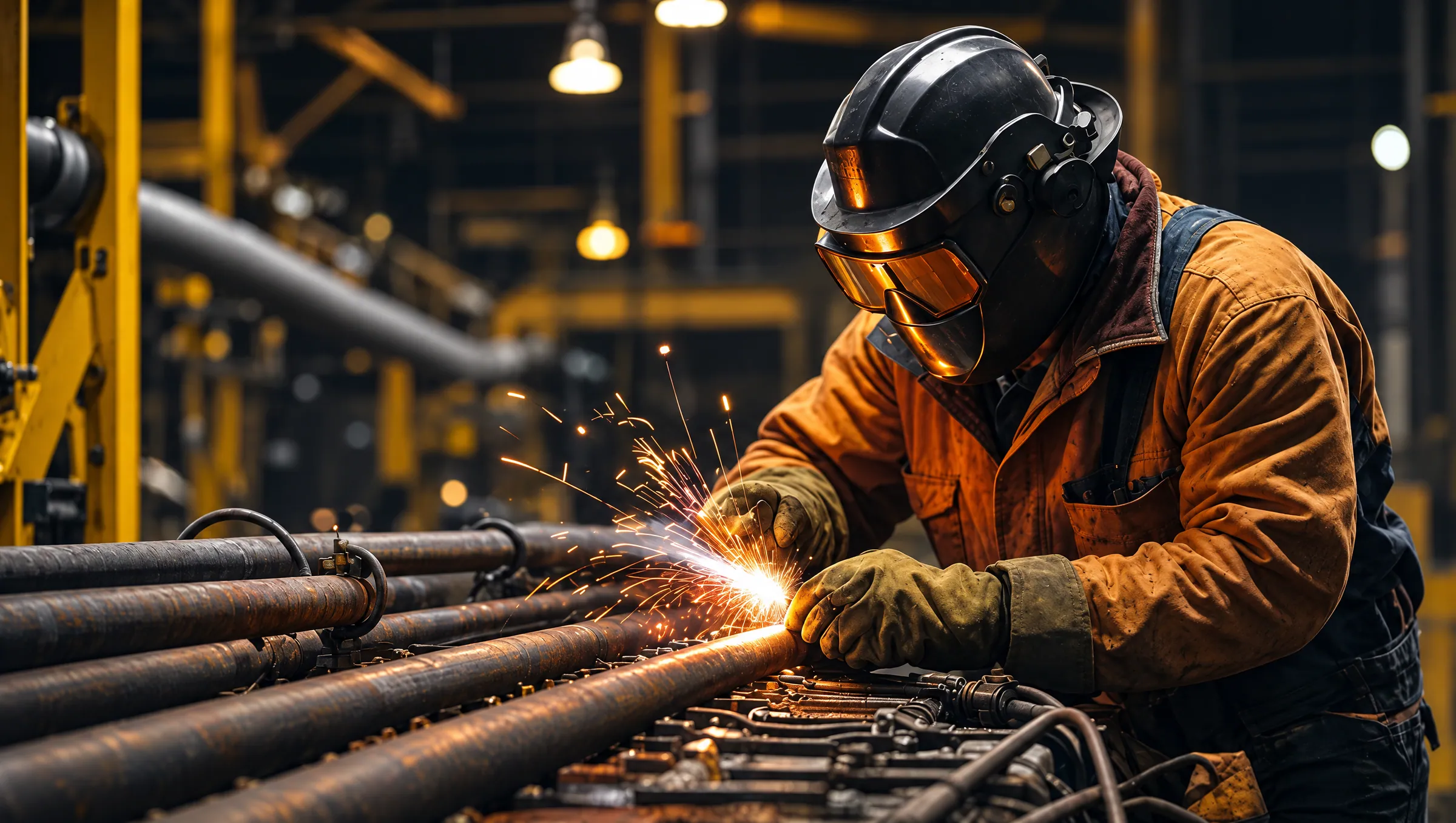
TIG Welding
With a tungsten electrode under argon shielding gas we lay clean, good-looking welds on stainless, aluminium and mild steel parts.
What is TIG welding?
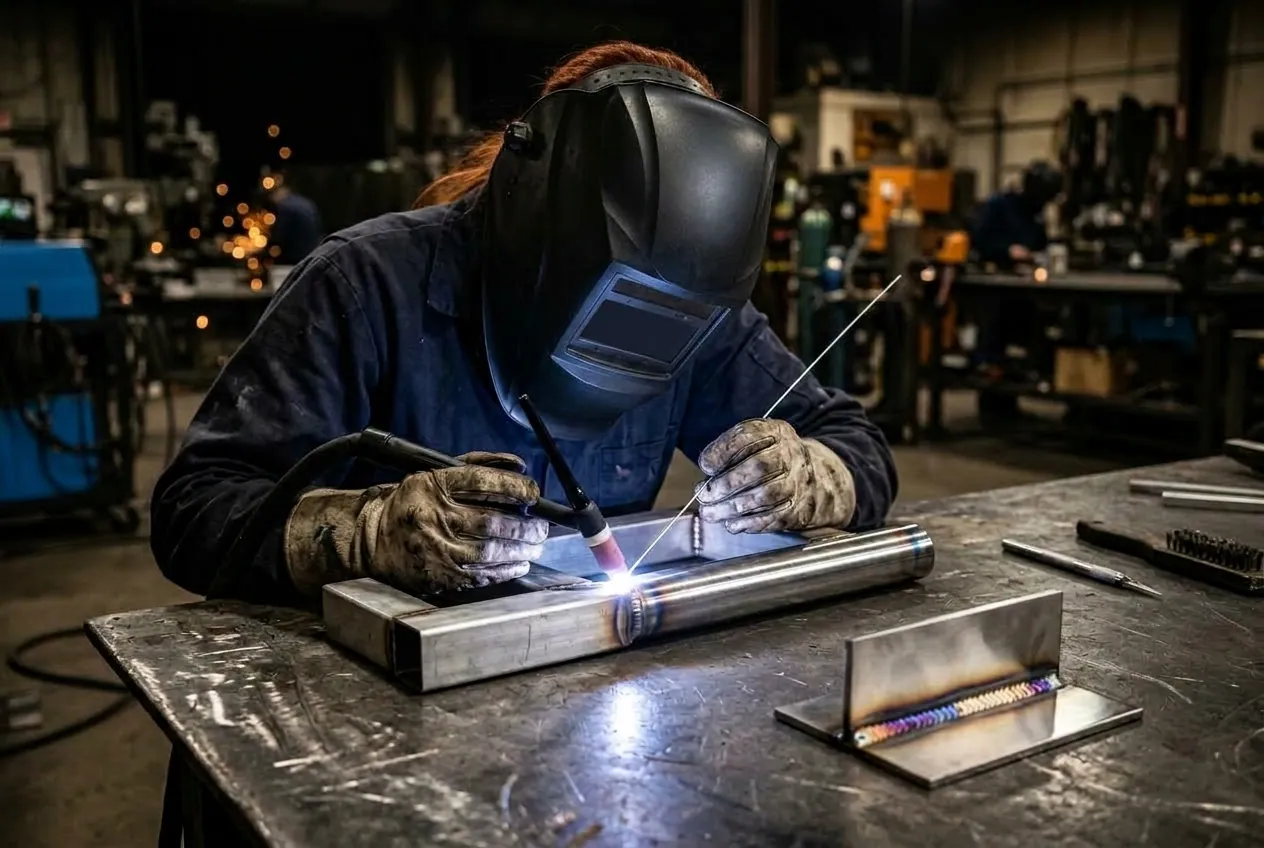
TIG welding (also called WIG, and known in Turkey as argon welding) uses an arc between a non-consumable tungsten electrode and the part to melt the metal, while argon gas shields the weld from the air. Filler wire is added by hand, in a controlled way, when needed.
Because the arc and the heat can be set precisely, it gives clean, slag-free, even welds on thin sheet, stainless steel and aluminium, and on seams that will stay in sight.
- Stainless tanks, enclosures and railings
- Aluminium parts and profiles
- Thin sheet fabrication
- Products that need good-looking seams
Why TIG welding
Clean, good-looking seams
No slag and no spatter: even seams that look right on visible faces.
Precise control
Current and filler are controlled by hand, so thin sheet is welded without burning through.
Several metals
Quality seams in stainless steel, aluminium and mild steel with one process.
Sound joints
Argon shields the weld for a pore-free, durable seam.
Less finishing
A clean seam means less cleaning and grinding afterwards.
TIG welding questions
Quick quote
Send your drawing by e-mail or WhatsApp and we will come back quickly with material, quantity and lead time.
Are argon welding and TIG welding the same?
Yes. What is called argon welding in Turkey is TIG (WIG) welding; the name comes from the argon used as shielding gas.
Which materials is TIG welding used on?
We use it on stainless steel, aluminium and mild steel, especially for thin parts and visible seams.
Should I choose TIG or MIG/MAG welding?
TIG suits visible, thin and delicate work; the faster MIG/MAG suits heavy profiles and structures. We decide together, depending on your part.
Other welding services
Get a quote for TIG welding
Send your drawing or a photo of the part with material, thickness and quantity.